
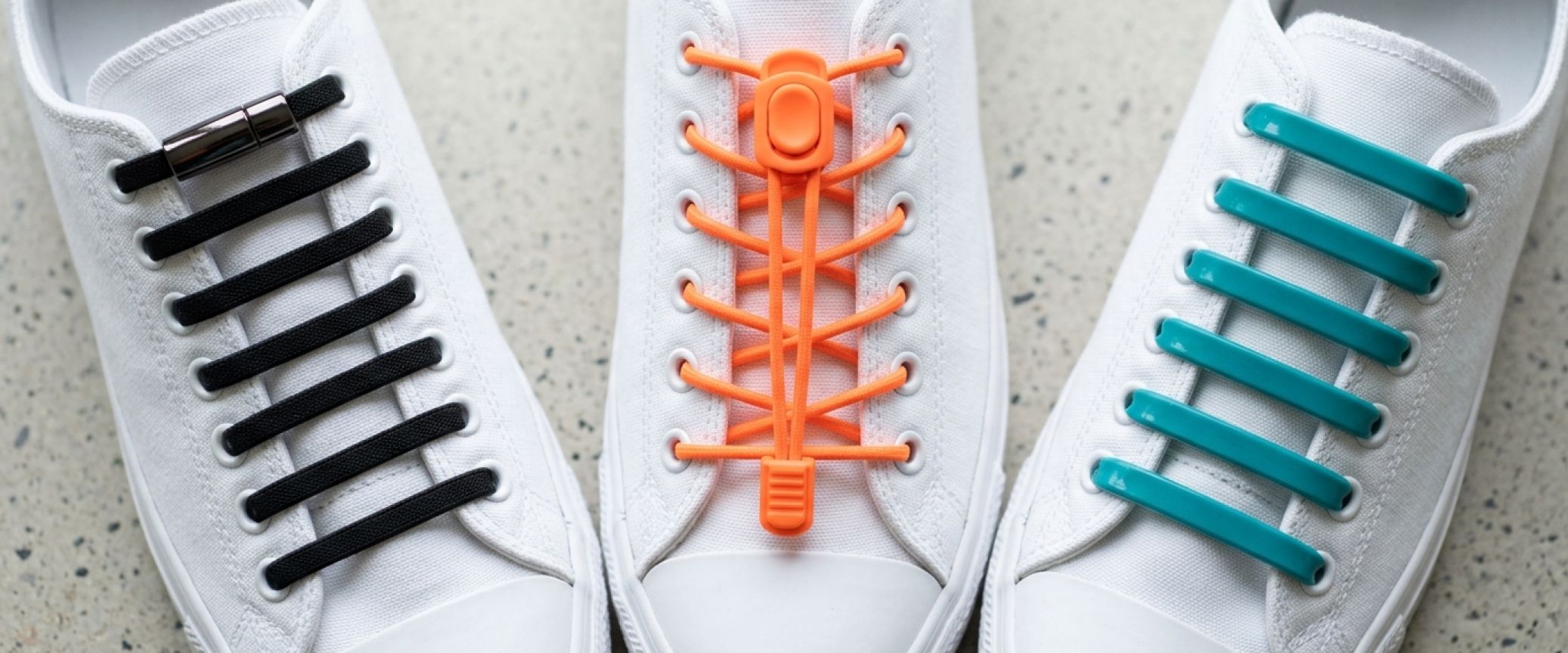
No-tie laces all promise the same thing: shoes you slip on and never tie again. How they keep that promise varies a lot. Some use a stretchy elastic lace with a lock at the end. Others skip the lock and use a separate silicone strap for each pair of eyelets (the holes the lace runs through).
This guide maps the whole range of no-tie shoelaces we stock, explains how each lock works, and matches each one to the people it suits. Start here, then follow the links to the type you need.
The short version: pick by who's wearing them
- Kids and school shoes: elastic with a capsule or tip lock, or silicone straps if the shoes get wet a lot.
- Runners and triathletes: flat elastic with a magnetic, capsule or tip lock, because tension stays even across the top of the foot.
- Stiff or arthritic hands: any lock system, set up once by someone else, then just slip on.
- Work and safety boots: usually stick with regular laces. Elastic is built to stretch, and boots need lockdown.
- Length: the standard eyelet chart doesn't apply to no-tie elastic laces. Use the length on each product page.
What are no-tie shoelaces and how do they work?
No-tie shoelaces are laces that hold your shoe closed without a bow. Most are elastic laces: you thread them through the eyelets, set the tension once, and fix the ends with a lock. After that the elastic stretches as your foot goes in and pulls back once it's on, so the shoe works like a slip-on.
The other main group skips the lock entirely. Silicone no-tie laces are short individual straps, one per eyelet pair, each with moulded tips that hold it in place. Our no-tie explainer covers the basics in more depth; this article is about choosing between the types.
The three families of no-tie laces
Every no-tie lace we sell falls into one of three groups:
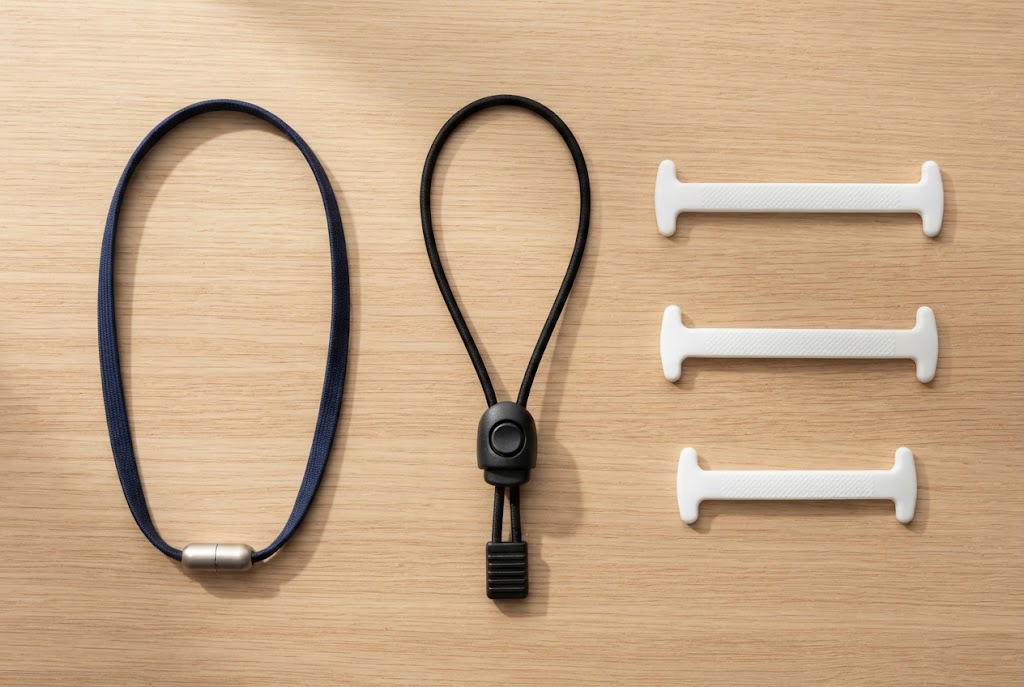
- Elastic lace + lock. One stretchy lace per shoe, held by a capsule, magnetic, press, tip, smart or anchor lock. Browse the full set of elastic no-tie laces.
- Elastic lace shape. The same idea in different cross-sections: flat, round or oval. Shape changes the look and how the lace sits in the eyelet.
- Lock-free. Silicone straps, knotted laces and V laces. Nothing to screw, clip or press.
The lock decides how easy the laces are to fit and adjust. The shape decides how they look. The family decides whether you're dealing with hardware at all.
Every lock type compared
These are the lock systems where we have full product specs. Install effort here means the one-time setup; after that, all of them are slip-on.
No-tie lock types at a glance
| Lock type | How it holds | Lace | One-time setup | Colours | Suits |
|---|---|---|---|---|---|
| Capsule | Threaded capsule screws together over the trimmed ends | 5mm flat elastic | Thread, set tension, trim, screw capsule on | 27 | Everyday sneakers, kids, runners |
| Magnetic | Magnetic hardware fastens the ends together | 5mm flat elastic | Thread, set tension, fit lock | 29 | Runners, triathletes, limited mobility, low-top boots |
| Press | Press lock clamps the lace at set tension | 3mm round elastic | Thread, set tension, fit lock | 20 | Casual sneakers, running and walking shoes |
| Tip | Tip locks secure the tension and stop fraying | 5mm flat elastic | Thread, set tension, fit lock | 28 | Casual sneakers, running shoes, kids |
| Silicone (no lock) | Moulded tips anchor each strap in its eyelets | Individual silicone straps | Push one strap through each eyelet pair, no cutting | 13 | Kids, wet conditions, anyone avoiding hardware |
Capsule lock
The capsule lock no-tie laces use a small threaded capsule. Once you've trimmed the elastic to your length, the capsule screws together over the cut ends, hiding them so they can't fray. That makes it a permanent anchor: set it once and leave it.
Our Flat Elastic No-Tie Shoelaces (Capsule Lock) are 5mm flat, so they look like ordinary flat laces from a distance. The elastic core sits inside a tightly woven sheath, which resists the rubbing from eyelets that wears ordinary laces thin.
Magnetic lock
Magnetic no-tie laces fasten the two lace ends together with magnetic hardware, so the tension stays set without tying. The Flat Elastic No-Tie Shoelaces (Magnetic Lock) are 5mm flat elastic and come with a choice of metal aglets (the hard tips on the lace ends) in all colours, or plastic aglets on select colours.
They're listed for running shoes, walking sneakers, everyday trainers and low-top boots, the widest shoe list of any lock here.
Press lock
The press lock no-tie laces are the round option: 3mm round elastic, with a press lock that holds the lace at your set tension without slipping. Round laces suit shoes that came with round laces, and the 3mm profile passes through standard eyelets without bunching. They come in 20 colours, with the lock hardware in a choice of metal finishes.
Tip lock
Tip lock no-tie laces put the locking hardware on the lace ends themselves, so the tips do two jobs: they stop fraying and they hold the tension. Ours are 5mm flat elastic in 28 colours, built for casual sneakers, running shoes and everyday walking shoes. The flat profile sits across the top of the foot without rolling or twisting.
Smart lock and anchor lock
Two more ways to hold elastic tension. Smart lock no-tie laces and anchor no-tie laces each use their own lock design. Like the capsule lock, a smart lock doesn't tie a bow, so check the length on the product page rather than the eyelet chart. Compare the hardware and colours on each category page.
Flat, round or oval elastic?
Once you've picked a lock, the lace shape is mostly about matching your shoe:
- Flat (5mm): looks like a standard sneaker lace and spreads tension across the top of the foot. Our capsule, magnetic and tip lock laces are all 5mm flat.
- Round: a neater, cord-like look for shoes that came with round laces. See the round no-tie laces, including the 3mm press lock version.
- Oval: sits between the two, common on running shoes. Browse the oval no-tie laces.
The easy rule: replace like with like. If your shoe came with flat laces, flat elastic will sit the way the shoe was designed.
Lock-free options: silicone, knotted and V laces
If you'd rather not deal with locks, trimming or tension at all, these skip the hardware.
Silicone. Silicone no-tie laces are individual straps, one for each eyelet pair. Each strap has moulded tips that lock into the eyelets under tension. Silicone doesn't absorb water, sweat or dirt, so you wipe them clean on the shoe. Our Silicone No-Tie Elastic Shoelaces come as a multi-piece set for one pair of shoes, in 13 colours including Multi Color.
Knotted. Knotted no-tie laces are another lock-free style. There's no hardware at the ends to fit or adjust.
V laces. V laces are their own no-tie design. Check the category page for how they fit before you buy.
Lock laces vs silicone laces: which is better?
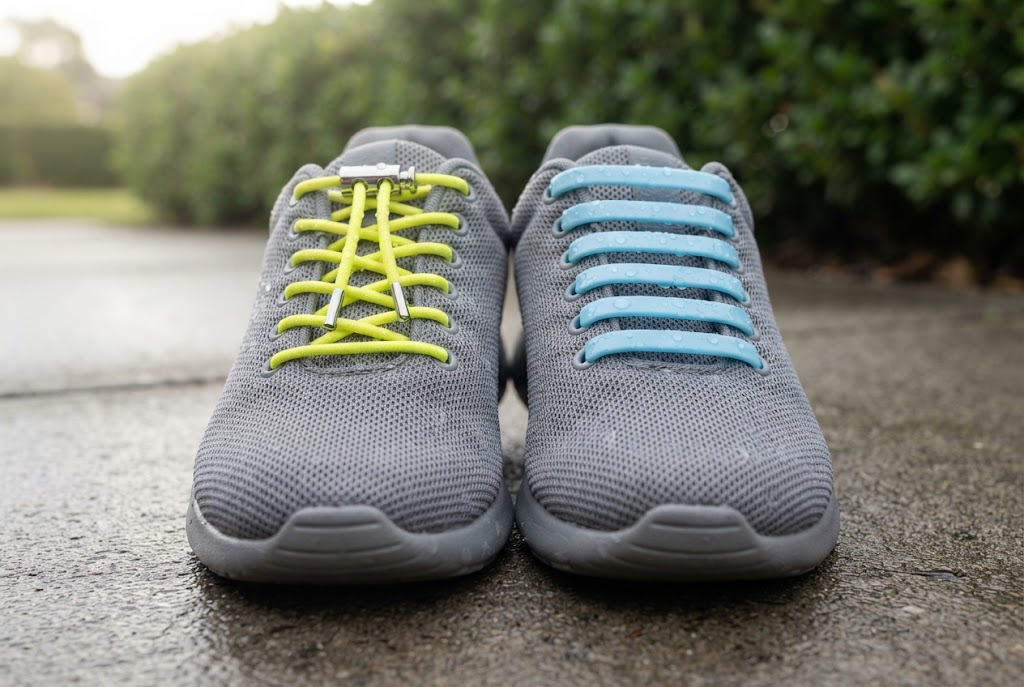
Neither is better overall. Lock laces (elastic + a lock) suit you if you want one continuous lace that looks like a normal lace and tension you set across the whole shoe. Silicone laces suit you if you want no hardware, no trimming, and something that shrugs off water and mud.
Lock laces vs silicone laces
| Elastic + lock | Silicone straps | |
|---|---|---|
| Looks like | A normal flat or round lace | A row of separate bands |
| Tension | Set once along the whole lace | Set per strap, eyelet by eyelet |
| Setup | Thread, set tension, fit the lock (capsule also needs trimming) | Push each strap through, no cutting |
| Wet and mud | Synthetic fibres repel light moisture | Doesn't absorb water at all |
| Hardware | Lock at the top of the shoe | None |
The practical tie-breaker: if the shoes see puddles, beach sand or a school oval in winter, silicone is easier to keep clean. If you want the shoe to look laced, go elastic with a lock.
Are no-tie shoelaces any good for running?
Yes, for most runners. Elastic laces give even tension across the instep (the top of your foot) and can't come untied mid-run. The stretch also lets your foot swell a little over a long run without the laces pinching.
That's why triathletes use them: the shoe goes on in seconds at transition with no bow to tie. For running, a 5mm flat lace with a magnetic, capsule or tip lock spreads pressure best, because the wide flat band doesn't dig in the way a thin cord can.
One trade-off: elastic stretches by design. If you want a rigid, locked-down fit for steep trail descents, keep a pair of regular laces for those shoes and set the elastic firmer on your road shoes.
No-tie laces for kids
No-tie laces solve the morning shoe battle for kids who can't tie a bow yet. Set the tension once on a weekend, and the shoes go on and off without help.
- Capsule or tip lock elastic: looks like normal laces, which matters for school uniform shoes.
- Silicone: colourful and wipe-clean, and there's no lock for little fingers to fiddle with.
If you're doing a whole family, the multi-buy helps: save 5% on 2 or more items and 10% on 5 or more.
Are no-tie shoelaces good for elderly or arthritic hands?
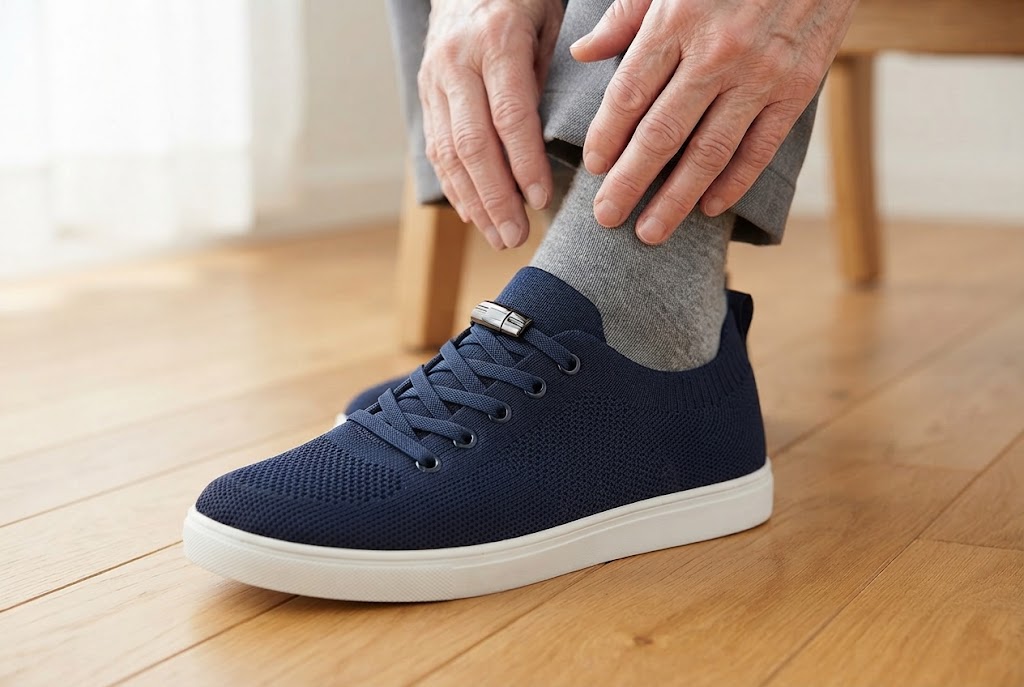
Yes. Once they're set up, no-tie laces need no gripping, pulling or bow-tying, because the elastic stretches to let the foot in and pulls back once it's on. That takes the fine finger work out of putting shoes on.
The catch is the one-time setup: threading, setting tension and fitting a lock is fiddly work. If hands are stiff, have a family member or carer do it once. After that:
- Magnetic, capsule, press or tip lock laces stay set, so there's nothing to touch day to day.
- Silicone straps have no hardware at all, but pushing each strap through an eyelet is also a job for steadier hands at install time.
The point is to remove the daily task, not the setup.
Are no-tie shoelaces suitable for work boots?
Mostly no. Elastic laces are built to stretch, and work and safety boots usually need firm ankle support and a fit that doesn't move. That's exactly what a stretchy lace gives up. Our elastic no-tie laces are designed for sneakers, running shoes and walking shoes. The magnetic lock version also lists low-top boots, so it's an option for a light, ankle-height boot worn around the yard.
For a full-height work or hiking boot, stick with regular laces in the right length. Boots use the same chart as sneakers, just with more eyelet pairs. Count the speed hooks (the open hooks near the top) as eyelets too.
Criss-cross lengths for boots
| Eyelet pairs | Typical shoe | Criss-cross (recommended) | Straight bar |
|---|---|---|---|
| 9 | High-tops, hiking shoes | 150cm (59.1″) | 135cm (53.1″) |
| 10 | Boots | 160cm (63.0″) | 135cm (53.1″) |
| 11 | Boots | 170cm (66.9″) | 150cm (59.1″) |
| 12 | Tall boots | 180cm (70.9″) | 155cm (61.0″) |
We stock up to 180cm (70.9″), nothing longer. Browse long laces for boots and high-tops, or use the full shoelace size chart for other eyelet counts.
What length do no-tie laces need?
The standard eyelet chart doesn't apply to no-tie elastic laces such as the capsule and smart lock types. That chart includes extra lace to tie a bow, and these laces never tie one. Use the length listed on each product page instead.
With the capsule lock, you trim the elastic to fit your shoe and the capsule covers the cut ends. Silicone straps come as a set sized for one pair of shoes.
Ordering
Standard shipping is free on every Australian order. It usually takes 1–4 business days to Sydney, Melbourne, Brisbane, Adelaide and Perth metro, and 3–7 business days elsewhere. Order by 12pm Sydney time on a business day and it's dispatched the same day. Need it sooner? Express Post is $11.35 per order and usually takes 1–3 business days. See delivery details.
If a lock type turns out wrong for your shoe, you have 30 days to return it. Check the returns policy for the details.
Not sure where to start? Pick who's wearing them from the short version above, then compare the lock types on the no-tie category page.